 Wallingford Writing
- ✏️She does the writingEvery sentence is built by her, fixed by her and signed by her.
- 🐈Writing has a jobEach piece goes to a reader who really reads it. Did it work?
- 💛Nothing to loseNo timers, no red marks. A piece that misses gets one sentence changed.
- 🔒No ads, no accountsNo tracking, no internet needed. What she writes stays on the device.
Draft
One sentence at a time.
A request card says who needs what. Then the page fills up, a line at a time, and every line is built a different way.
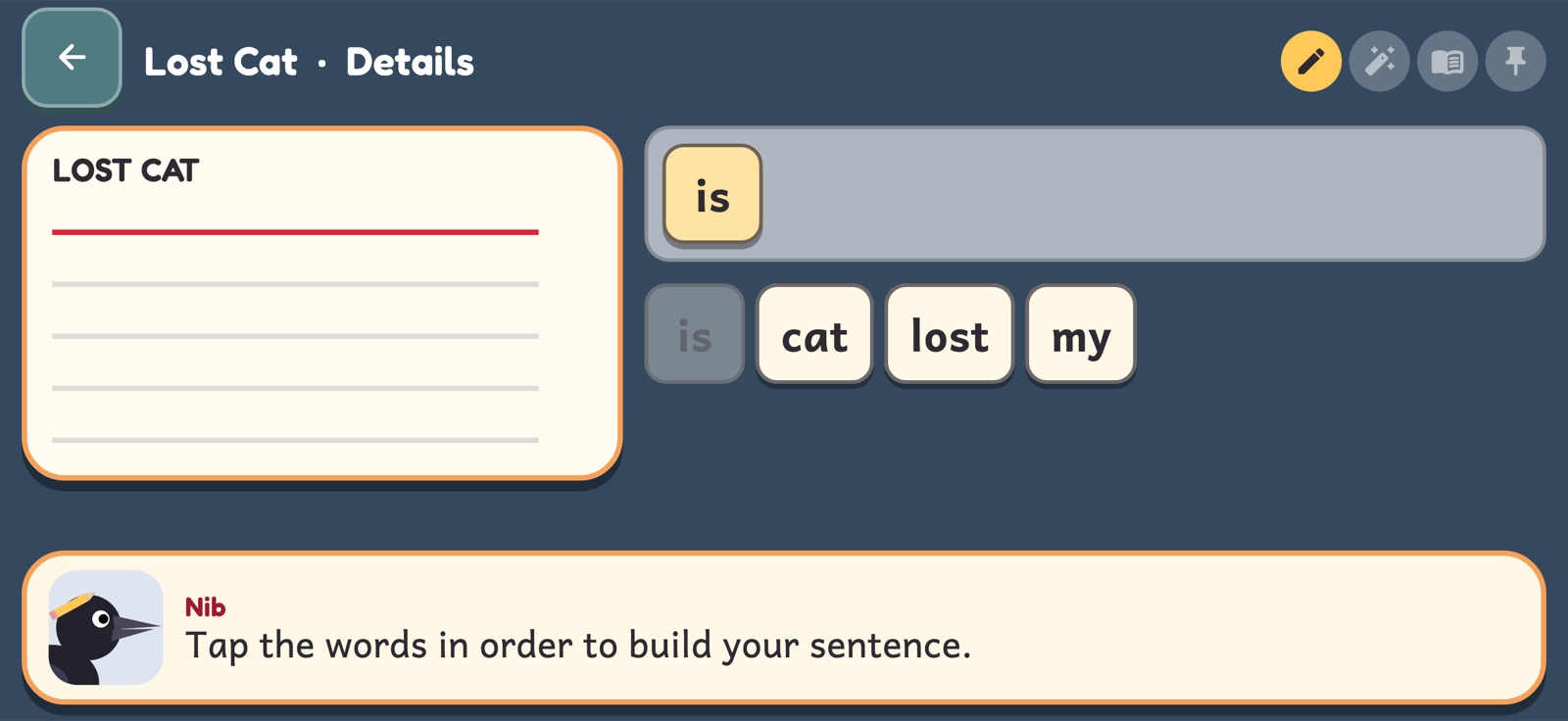
- Tap word tiles into order to build a sentence that sounds right.
- Finish a sentence with the words you like best. All three are good.
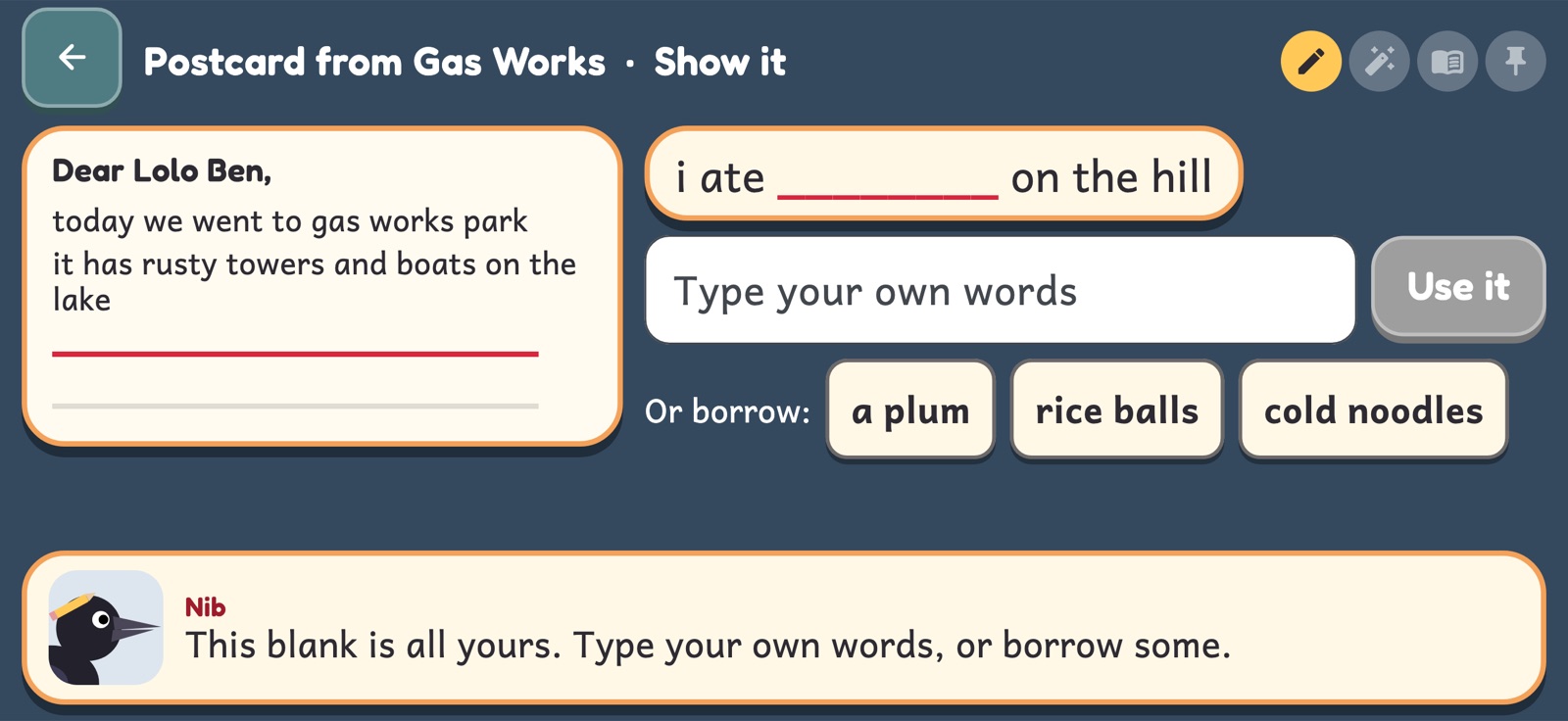
- Some blanks are all hers: type your own words, or borrow some.
- Spelling words are heard, not shown, and built from letter tiles.
Fix up
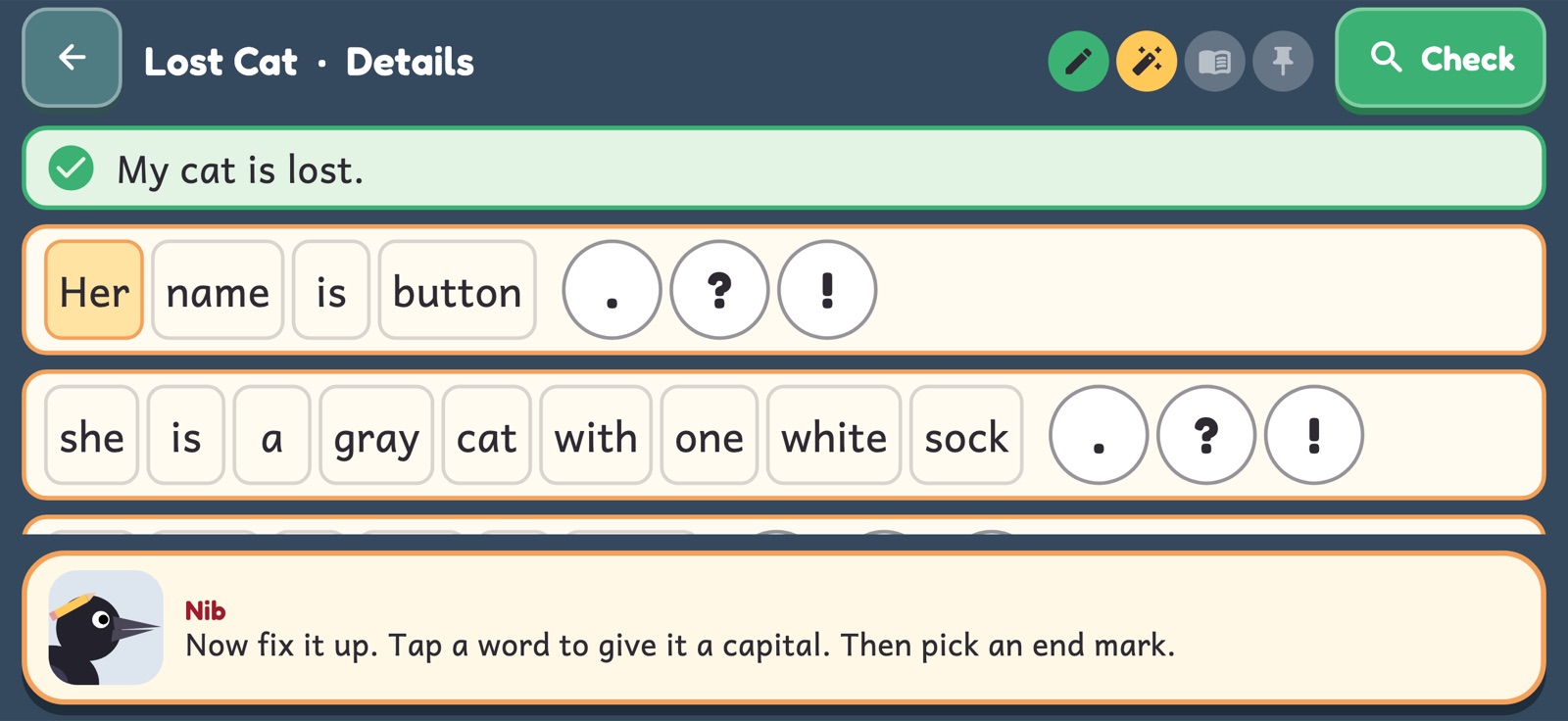
Her own capitals. Her own end marks.
The draft is all small letters with no end marks, on purpose. Fixing it up is her job: tap a word to give it a capital, and pick how each sentence ends.
- The first word, names, and the word I.
- Telling, asking or shouting? A period, a question mark or an exclamation mark.
- Nib checks, and gives the rule for the first line that still needs something. Nothing is ever marked wrong in red.
her name is button Her name is Button.
Reader test
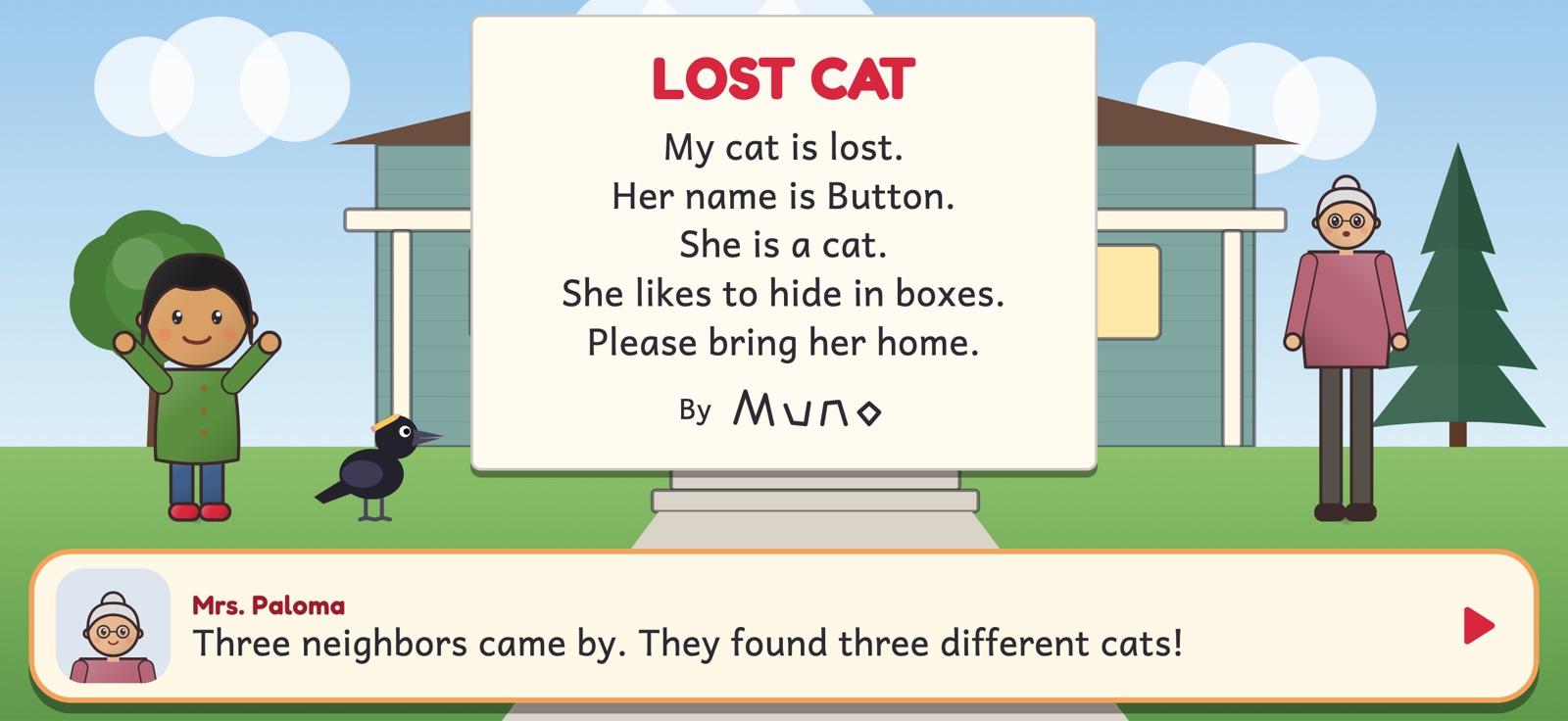
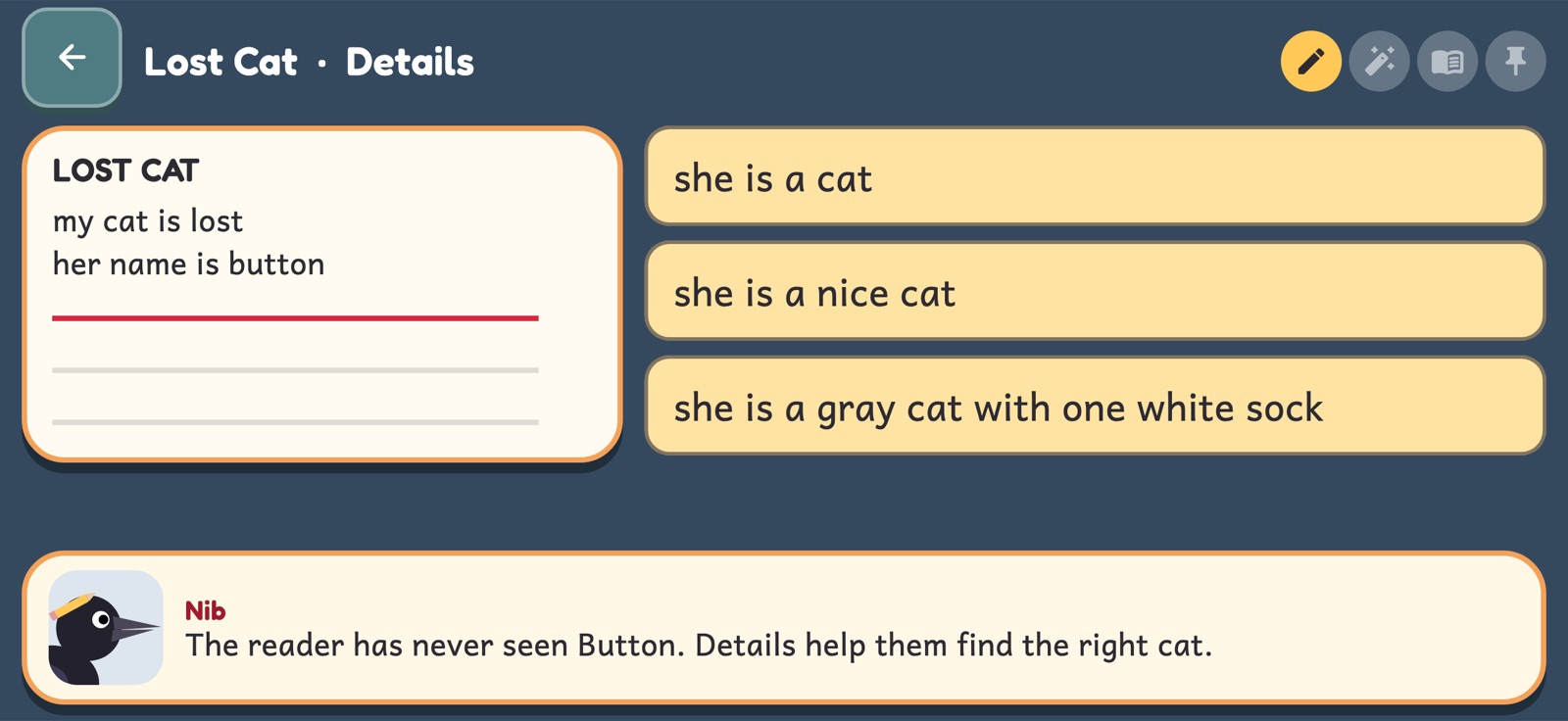
"She is a cat." Three cats show up.
Every piece has one writer's choice, and whatever she picks gets written and really read. The reader does exactly what the page says.
- A sign with no details finds the wrong cats. A how-to with the steps out of order drops a kite on a shoe. An invitation with no day gets guests on Friday and Sunday.
- Then she changes that one sentence and tries again. The rest of the page stays.
- "That is how writers learn" is the only thing anyone says about it.
Publish
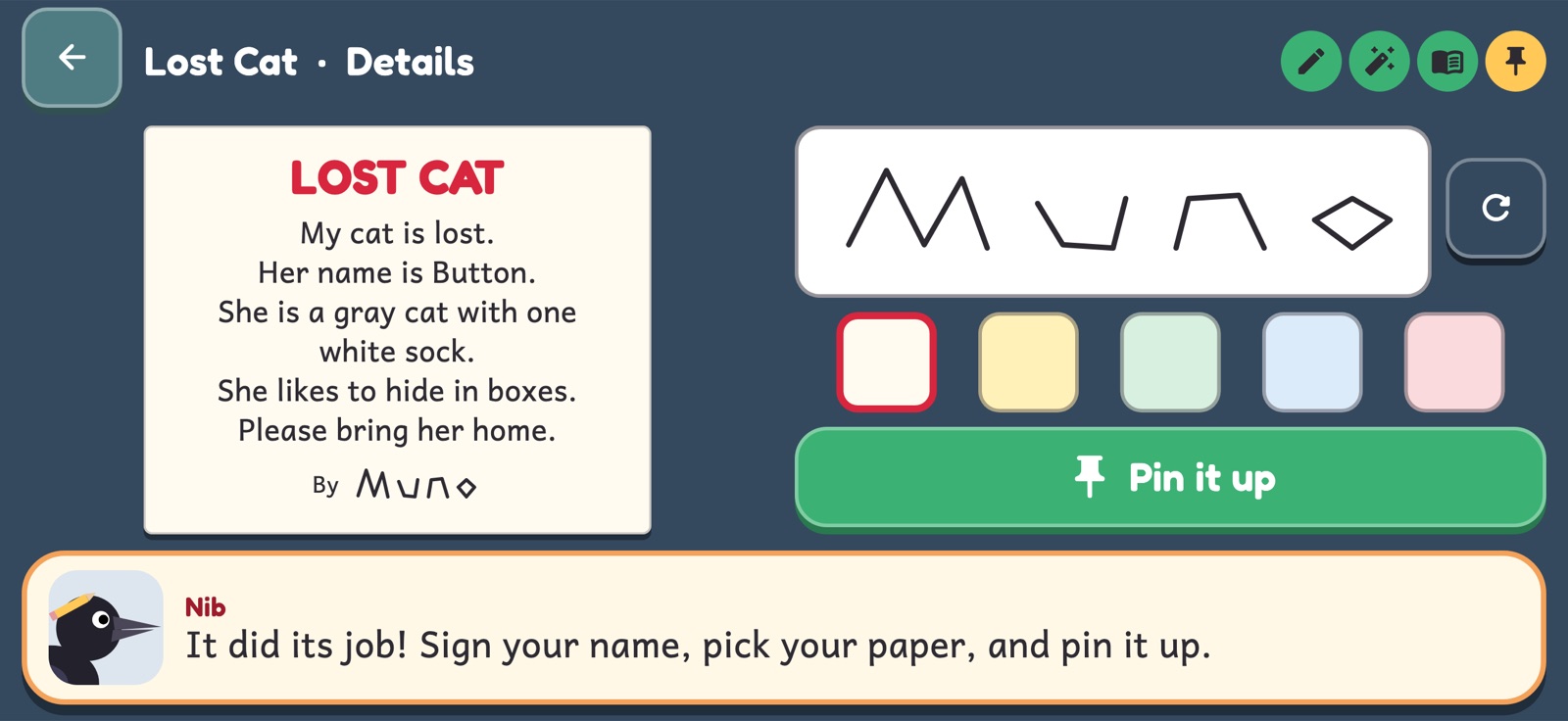
Sign it. Pin it up.
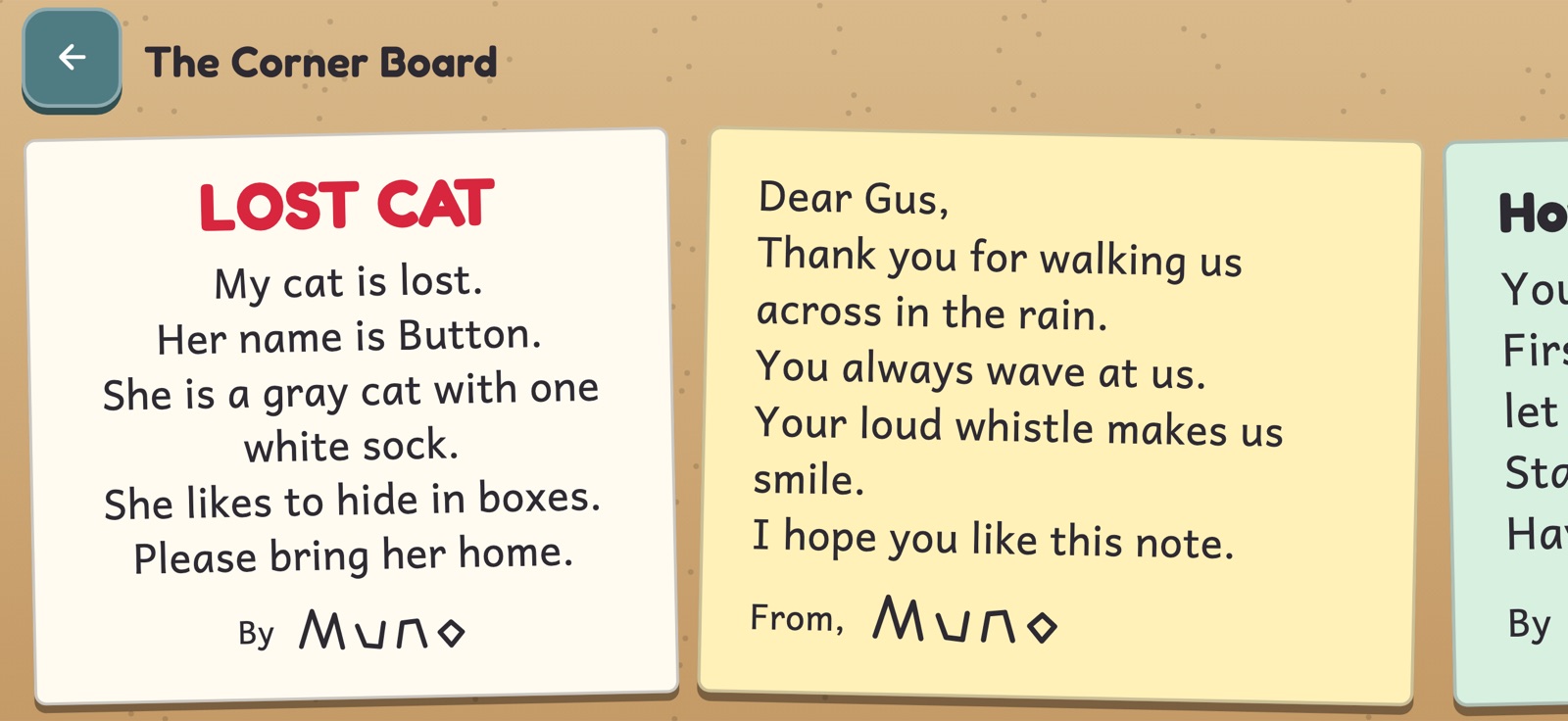
When a piece has done its job, she signs it with her finger, picks a paper colour and pins it to the Corner Board.
- Each piece is laid out for what it is: a sign is big and bold, a note has a greeting, a postcard has a stamp.
- "Read it to me" reads it aloud with each word lighting up, so she reads her own writing.
The Notebook
And pages that are only hers.
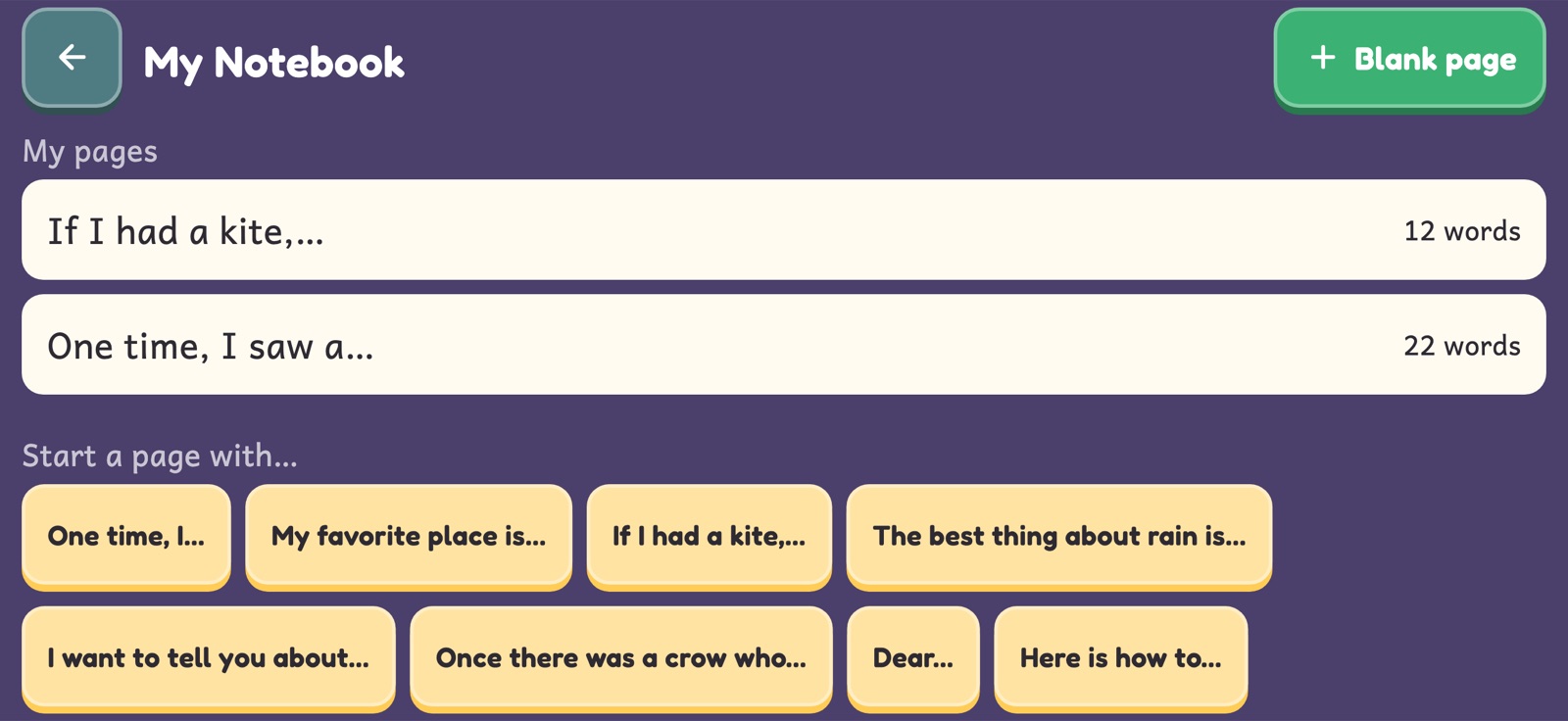
After the first piece, the Notebook opens: blank pages and the keyboard, with twelve ways to start if she wants one ("If I had a kite…").
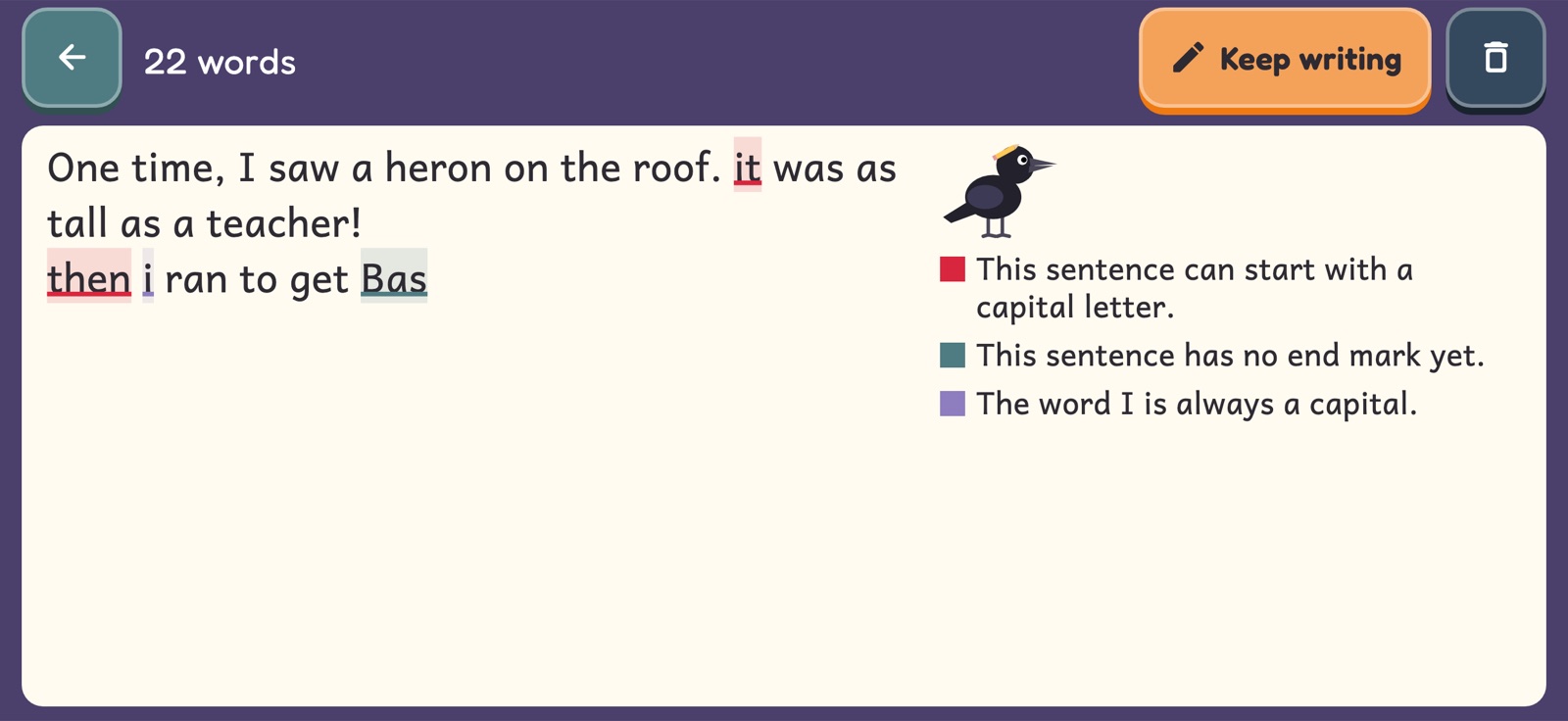
- Nib's look is optional. It notices three things only: a sentence that starts small, a sentence with no end mark, and a small i.
- It never judges ideas or spelling, and never stops a page from being saved.
- The Word Jar brings back spelling words from her pieces, the ones she missed first.
Ten pieces for ten readers
Each one teaches one thing writers do.
- Lost CatA sign for Mrs. Paloma. Details help a reader find the right cat.
- Thank You, GusA note for the crossing guard. A thank-you says what it's for.
- How to Fly a KiteFor Lin, who is new. First, next, last.
- Postcard from Gas WorksFor Lolo Ben, far away. Show it, don't just say it's nice.
- Come to the ParadeAn invitation has to say when and where.
- Rain PoemFor the bakery window. A poem can sound like the thing it's about.
- A Bench by the SwingsA letter to the parks crew. To change a mind, give a reason.
- Heron on the StandNews for the school paper. Who, what and where come first.
- The Kite That Got AwayA bedtime story. A good ending solves the problem.
- Our WallingfordA page in her own voice. Funny, cozy or bold: they all work.
For grown-ups
Wallingford Writing was made by a parent in Seattle for their own young writer, as a sister game to Maple Leaf Math, Licton Springs Language and Cascade Cardboard Creator. Here's what you can expect.
✏️ The writing process
Draft, fix up, share, revise, publish. It's the same loop writers use, with a real reader standing in for the red pen.
🔤 Mechanics she applies herself
Capitals for first words, names and I. Periods, question marks and exclamation marks. She fixes her own draft rather than spotting mistakes in someone else's.
🐝 Spelling in context
Two to four spelling words per piece, heard and built from letter tiles, each one a word the piece needs. Missed words come back in the Word Jar.
🗣️ Every line is spoken
Everything a character says is read aloud by your device's own voice. You can turn the voice or the music off.
⏳ No pressure
No timers, no streaks, no scores to beat. A reader who is confused is funny, never cross.
🔒 Private by design
No ads, accounts, analytics or tracking, and the app never goes online. Everything she writes is saved only on the device. Privacy policy
🏙️ A real neighborhood
Wallingford Playfield, Gas Works Park and Kite Hill are real public places. Every business, school and person in the game is made up.
📄 Then try it for real
The best outcome is a kid asking for paper: a sign for her door, a note for a neighbor, a postcard to someone far away.
Coming soon for iPhone, iPad and Android.
Wallingford Writing is still being built and tested by its first young writer. This page will have the links when it's ready.